
Beyond the Yap...
Jody Avirgan on the Space Between Chat and Documentary Podcasting


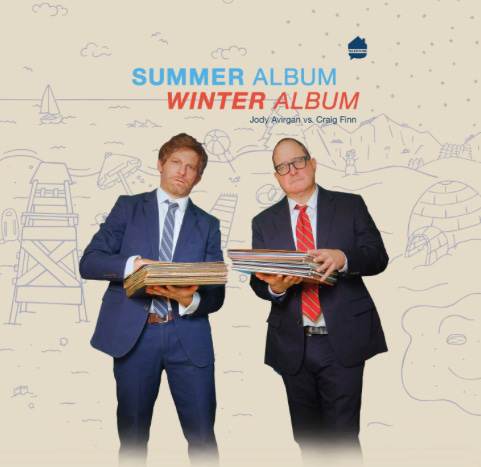
Jody Avirgan is a podcast host, producer, and editor, and founder of Roulette Productions. He currently hosts the Radiotopia show This Day and the music debate show Summer Album / Winter Album, and previously hosted Good Sport for the TED Audio Collective. He recently served as Executive Producer of What Now with Trevor Noah. He also serves as Executive Director of Lift Lab, a YouTube/podcast accelerator aimed at fostering a healthier media ecosystem.
You may also know Jody as the original host and creator of 30 for 30 Podcasts at ESPN Films, and the host of the FiveThirtyEight Politics Podcast from 2016-2019. He got his start at WNYC, working with shows including On the Media, Marketplace, Freakonomics, and 99% Invisible. He’s also worked with A.J. Jacobs, Dan Taberski, Barack and Michelle Obama’s “Higher Ground Media,” director Adam McKay, and many more.
All this to say, Jody knows what he is talking about and is the perfect person to ask about all things audio. Unanimous Media had the pleasure of tapping him for some incredible projects within our Podcast division, serving as Executive Producer on our Audible hit show, HEAT CHECK with Stephen and Dell Curry.
We want to take opportunities to sit with our collaborators and friends to talk about whats going on within our media landscapes and get their unique perspectives. This also gives us a chance for you guys to see deeper into what we do and who we do it with! Dive into this great conversation with Jody about his experience within the podcast world and how he sees it moving forward.
Who are you in podcasting? Where do you fit into the current landscape?
JODY: I’m of a kind of bridge generation. When I came out of college, if you wanted to make ambitious audio, the place to go was still terrestrial radio, public radio was where the first wave of podcasting really came from. After many years and different experiences I now have a small production company where I love to partner with folks but I also create my own shows. And just like what I did for you guys, sometimes I’m commissioned to staff up and make a show for someone fun.
I think I really like every part of the process and I’m always floating between hosting, producing, consulting, and editing. Not only can I run a team, I can also work independently. That’s one of the things I loved about audio to begin with is that it attracts people who want to be involved in every part of the process.
Talk to me about format and how podcasting has evolved.
JODY: So much of what we can make is dictated by the economic situation of the time. Podcasting’s had a bit of a roller coaster in terms of what formats are getting funded. In the first wave, a lot of it traced back to the This American Life ethos of reported documentary. There was a real appetite for it, but very expensive to make. I was lucky that when we were making the 30 for 30 films, they were funded and rewarded at the level of a short film and it might take a year and a half to get it on it’s feet.
At ESPN especially, there was also a long tradition of talk radio turned into podcasting — “we rip the audio from Mike and Mike and throw it on a feed.” So I had to make the case: yes, but there’s this whole other thing — that’s when I started using the phrase “audio documentary,” to shift the mental framework between chat podcasts and audio documentaries, with a whole range in between.
We were lucky that at both FiveThirtyEight and 30 for 30, there were real audiences and advertisers backing the documentary work. But over the next ten years, as more money came in, more good stuff got made and a lot of not-so-good stuff too. By 2020–22, there was a real saturation point: narrative documentary shows costing a lot and not finding the audience or ad return they used to, and the broader media ecosystem under financial pressure. It’s been the story of ambitious creative media all along, this stuff is really expensive to make so people started looking for cheaper formats: chat shows, recorded and solved in real time, versus documentaries where every creative problem means more reporting, more time, more expense.
One thing you and I talked about a lot when we started working together was that there’s a whole world between two people talking for ninety minutes and a documentary that took three years and two million dollars — a lot you can do in a studio, in one sitting, that still has the craftsmanship and narrative sense of a documentary. That’s been my professional and creative obsession.
By ‘22–’24 there was a real reckoning, and a push toward “always-on” content — forty cheap episodes a year instead of ten expensive ones. I think all of this works in cycles, though, and we’re at a saturation point again, including with the pivot to video — the same fatigue that hit narrative documentary and true-crime content a few years back. From the audience’s perspective, I think people are clicking back toward wanting something that feels genuinely special — a personal expression that could only come from one person. That’s how it goes in every medium.
You’ve worked with some major talent — Trevor Noah, Adam McKay, Stephen Curry. Any favorites or behind-the-scenes stories?
JODY: I’ve worked with Trevor Noah and Adam McKay on a documentary series, and Stephen is always near the top of the list. Part of it is timing — I established myself early, so by the time the podcasting boom hit I already had a reputation and a body of work.
At heart I’m a producer, and I look for genuine creative partners and people who want to know what’s special about audio, rather than just plugging into a microphone because it’s another platform. A lot of celebrity podcasts come from that other place; I’d rather work with someone ambitious and picky who treats it as a real project. When I got connected with Adam McKay, he has this incredibly audacious idea that you could explain our modern politics and culture through the lens of NBA tragedies in the 1980s. I was so taken by the big swing of it, and audio felt like the perfect medium to explore. “Death At The Wing“ is definitely one of my favorite projects, just because of the audacity of the idea.
Working with Trevor, he’s so thoughtful and talented — I came to see that long-form podcasting was actually the best use of what makes him special. It’s one thing to deliver a sharp headline joke on The Daily Show; it’s another to go deep, connect ideas, and learn things in real time. He has a producer brain too and we talked a lot about what makes audio special and how to make the show feel more elevated than a typical celebrity chat show.
Where do you think the industry is headed, especially with the push toward video as opposed to just audio for podcasting?
JODY: There will always be cheap stuff that finds an audience — if you want a quick buck, that’s still the way. But there will also always be people who want something more elevated, something only that person could have made. Even on YouTube, I think the algorithm is rewarding ambition and craft more than it did even a year or two ago — great set design, interesting music and graphics — the same reason people loved HBO: expensive and ambitious. The question is whether that gets monetized in the traditional way, and probably not through old-school ad dollars — but through crowdfunding, direct support, live events. The most important thing is finding an audience that’s genuinely passionate about what you’re making.
As for advice to people starting out: audiences are smart, they recognize when something is genuinely something you care about. The question is always — what’s the thing only you can say, and only in this medium? It’s not really about fame. Amy Poehler’s podcast works not just because she’s famous, but because there’s real intentionality behind it — a simple, powerful format device that makes it feel like someone actually cares.
Let’s talk about our own project — Heat Check. That one felt really special and how Stephen and his dad brought themselves to it.
JODY: That’s been, for me personally, in terms of podcasting, the most special show I’ve done. We got connected when I’d just come off 30 for 30, and Unanimous was looking for someone who thinks about sports in a way that taps into bigger ideas, not just what happened on the court. Pretty early on we realized we weren’t going to do a show where Stephen just talks about games — we wanted something that tapped into what he really cares about: basketball, but also family, faith, and the community around him.
That’s when it evolved toward oral history — what you do when you’re sitting with family around a table, telling stories you’ve told a thousand times but always adding one more detail. I’ve always loved unnarrated audio — no host, just someone’s voice, music, and archival — and there’s something magical about that. So we built it to be just Stephen and the people around him, no celebrity host narrating over it, so it would feel like real oral history. I think that’s what makes it fit the level of emotion and intimacy we were going for. I absolutely love that it’s just their voices.
Do you have a dream project?
JODY: I’ve had an itch to come back to some big sports stories. A few years ago I would have made them as audio docs or saved them for 30 for 30 — now I’m thinking maybe scripts, maybe films. One of the beautiful things about the last ten years is that the worlds of media have overlapped so much more — I come from podcasting, but I’ve gotten to work with film and YouTube people too. I want to keep pursuing that: get passionate about a project and let the format follow. But first and foremost, it’s about what stories I love and I’m definitely thinking about sports stories again.
Well, on that note — thank you, that was awesome.
Lastly, our Most Valuable Perspectives (MVPQ’s) Questions!
1. What is your favorite tradition? I’m incredibly lucky that my group of close friends from college have all stuck together, all still live close by in Brooklyn, and spend all our time together. And now we all have kids who are friends with each other. What a beautiful thing. My favorite tradition is “Dad’s Weekend,” where the dads take all the kids away for a long weekend in the Fall. We’re still in a magical window where the kids - ranging from 1 to 15 - all still get along great. And we’re told the Moms have a fun time back in Brooklyn by themselves.
2. You can only choose one: Olympic Medal, sneaker deal or Championship ring. I don't think there's anything more satisfying than a championship ring. Being on a team is probably my favorite thing in the world, and having it come together over the course of a season and culminate in a championship... that's where it's at. That said, I think experiencing the Olympic Games seems pretty cool.
3. What is something you ask for everyday? A few years ago, I made a resolution: every day I would sweat; and every day I would nap. I've learned that exercise and sleep are basically the only magic bullets in this world. But I also think it gets at something bigger: I try to really be in tune with my physical self, and give myself time and space... so I think what I ask for every day is a reminder to slow down and take care of myself so I can take of those around me.
That was our interview with Jody Avirgan and you can find him here: https://www.instagram.com/jodyavirgan/
 | A guest post by
|